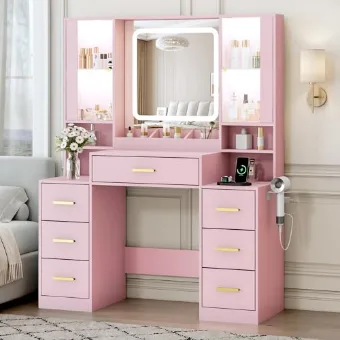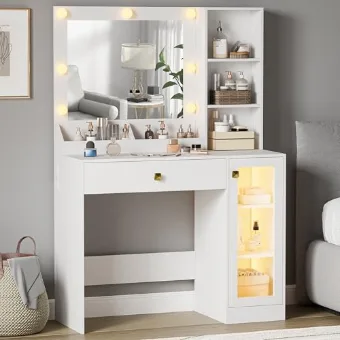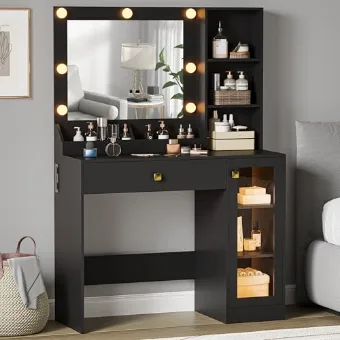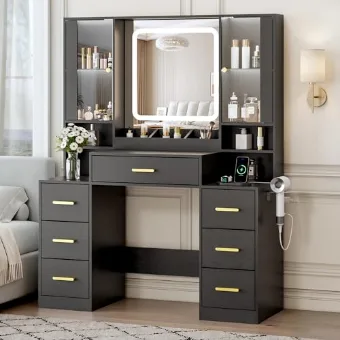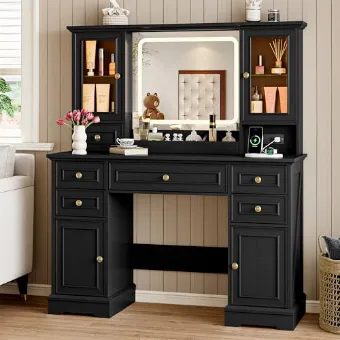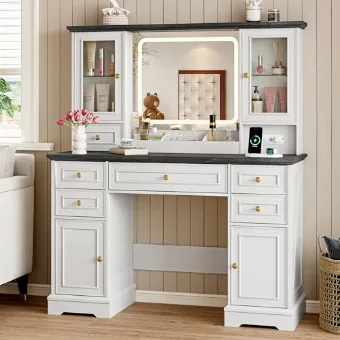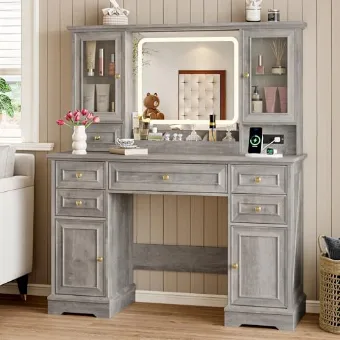
Vanity Desks
18 pieces
230 pieces · 10 departments
We make one kind of promise about a piece of furniture: it should hold what you own, fit the gap you actually have, and look like it was chosen rather than settled for. Our range runs to 230 pieces across 10 departments, from a 17.7 inch nightstand to a 65 inch sideboard, and every size is given to a tenth of an inch, never rounded to the nearest whole one.
The range
Reeded fronts, softened corners and brass or hidden handles carry across the whole range, so a hall cabinet and a bedroom chest read as part of the same room. Pick the department by the job you need doing.
Chosen from the range
One from each department where we have the depth, and the widest of what we publish where we do not. Prices come from our own update on 25 September 2026.
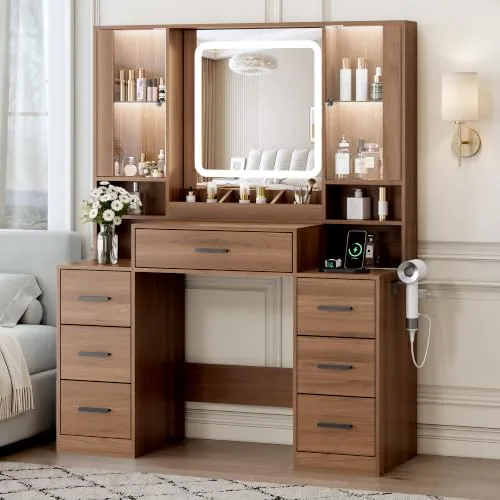
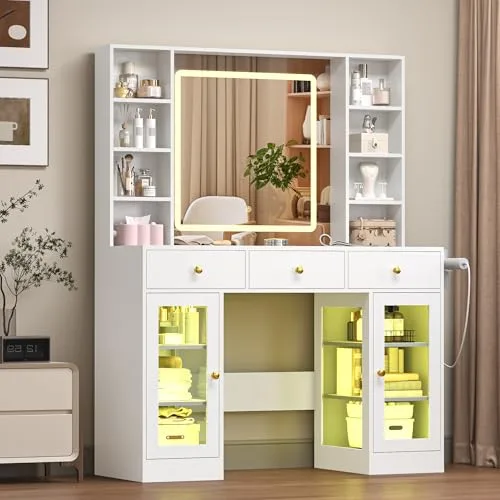
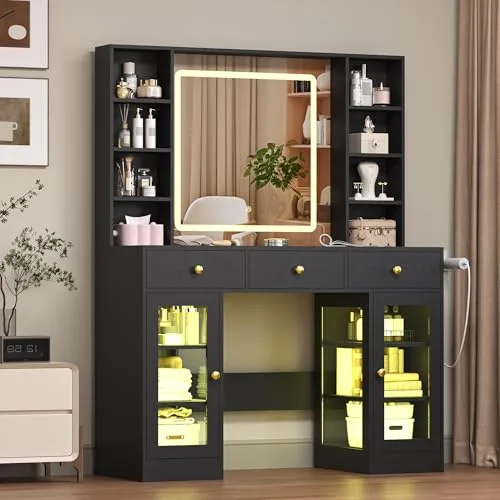
55.1 in wide · 7 drawers · white

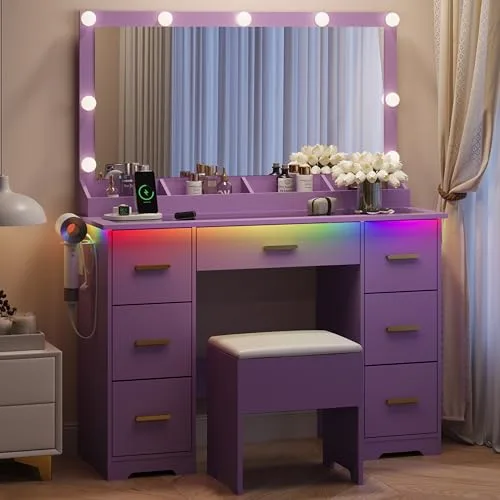
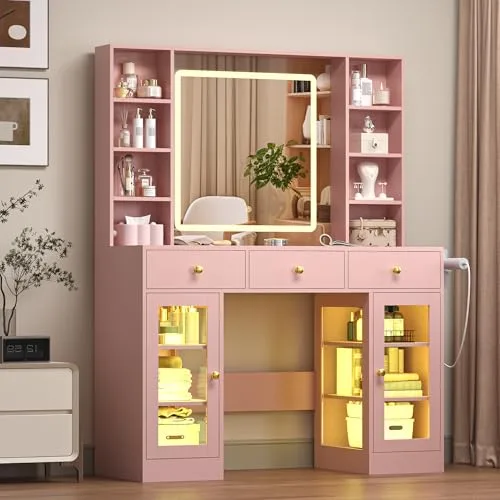
55.1 in wide · 7 drawers · pink
Tool
Furniture is returned over inches. Put in the space you have and this lists what fits, counted against the published size of all 230 pieces. Leave a box empty to ignore that dimension.
Sizes are the published outside dimensions of the piece. Doors and drawers need clearance in front of that, and a hall needs a walkway left over.
Before you order
The returns in this category are almost never about the furniture. They are about the gap being measured once, at the widest point, with the skirting board forgotten.
Measure between the two things that actually stop the furniture: a skirting board that runs proud, a radiator, a door architrave. Take the narrowest of the three.
A hinged door needs its own width in clear floor. A drawer needs roughly its depth. Our deepest drawers sit in pieces 19.3 inches deep, so allow around that in front.
Most rooms have a skirting board an inch or so proud of the wall. A piece with a flat back sits that far into the room unless the back is relieved. Measure to the skirting, not the plaster.
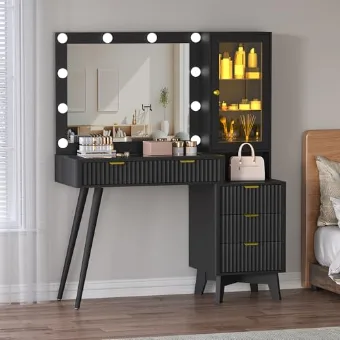
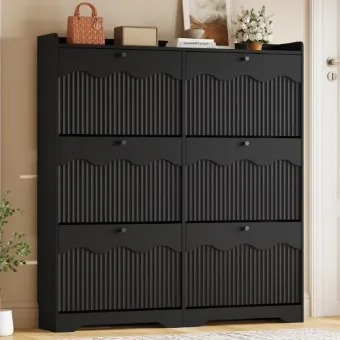
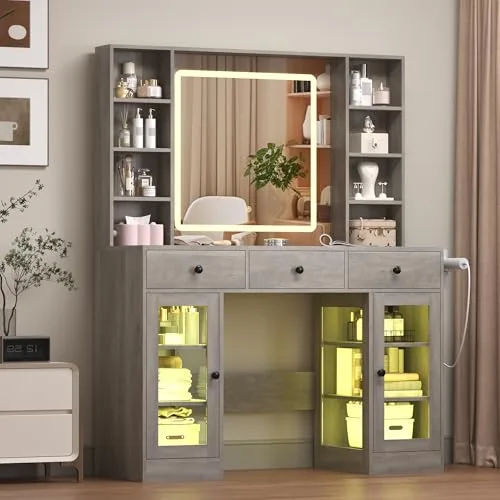
44.8 in wide · 5 drawers · black
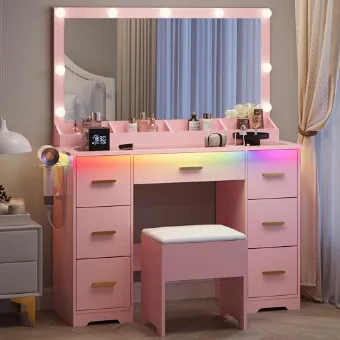
43.7 in wide · 7 drawers · pink
Every piece here arrives flat and is built in place, so the doorway question is about the packed box rather than the finished piece. It is still worth checking a tight stairwell turn.
A chest under a window wants to clear the sill and the handle. Measure to the lowest thing that sticks out, which is usually the handle rather than the sill.
Widths above about four feet are worth measuring twice at both ends. Walls are rarely parallel, and the difference is often half an inch.
Side by side
Ten departments, the wall they are built for, and the trade you make by choosing one over another. Widths and heights are the real published range within each department.
| Department | Size range (in) | Price | What it solves | The trade |
|---|---|---|---|---|
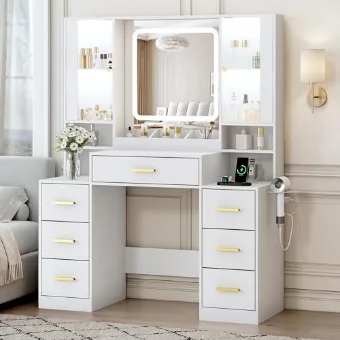
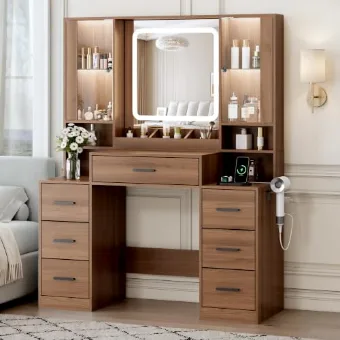
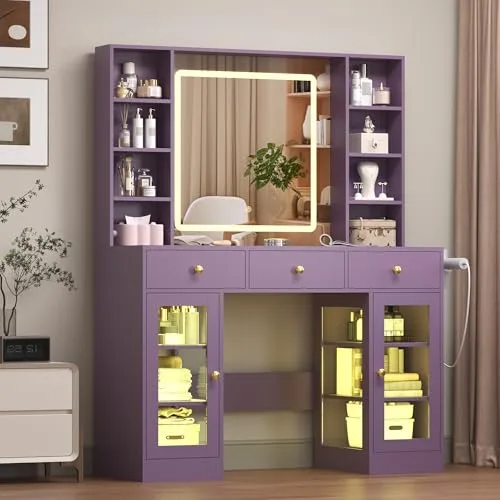
| Vanity Desks18 pieces | W43.2–55.1H43.3–55.6 | $159.99–$299.99 | Lights a face properly and keeps the whole routine in one place. | A lit mirror needs mains power near the seat. |
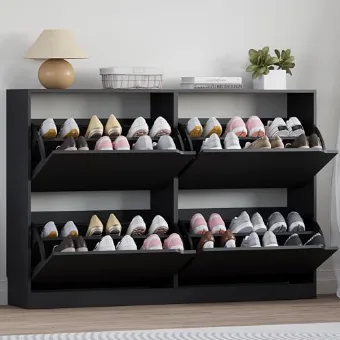
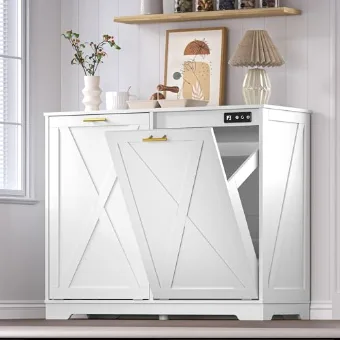
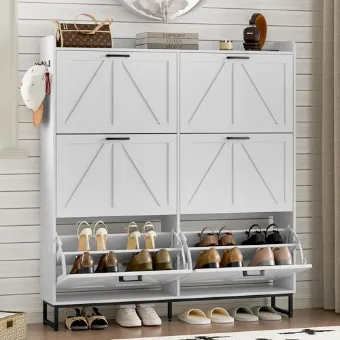
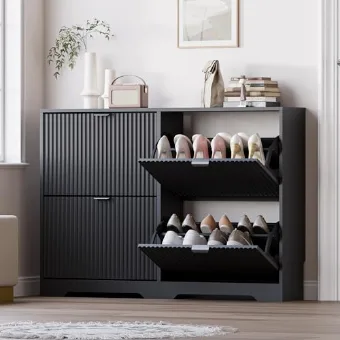
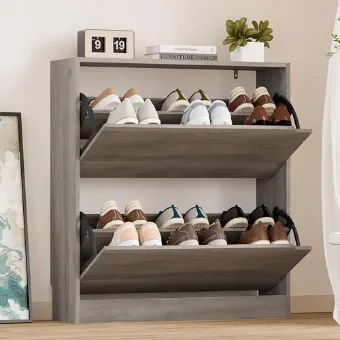
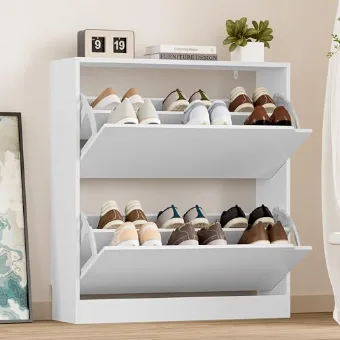
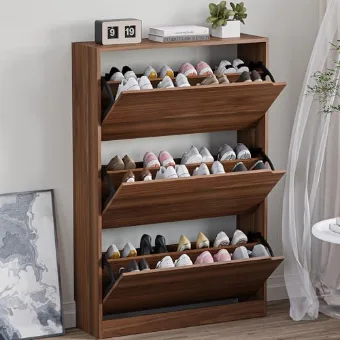
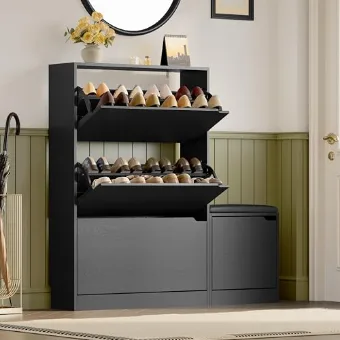
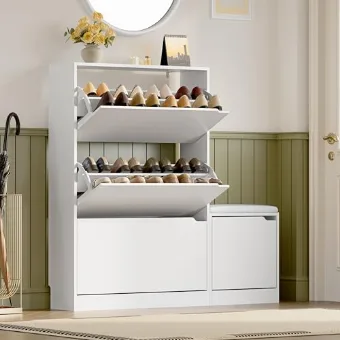
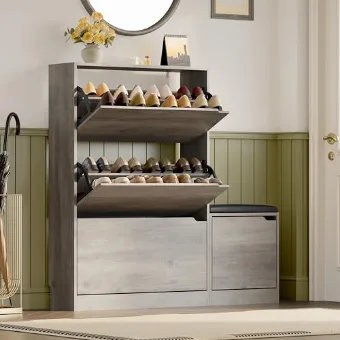
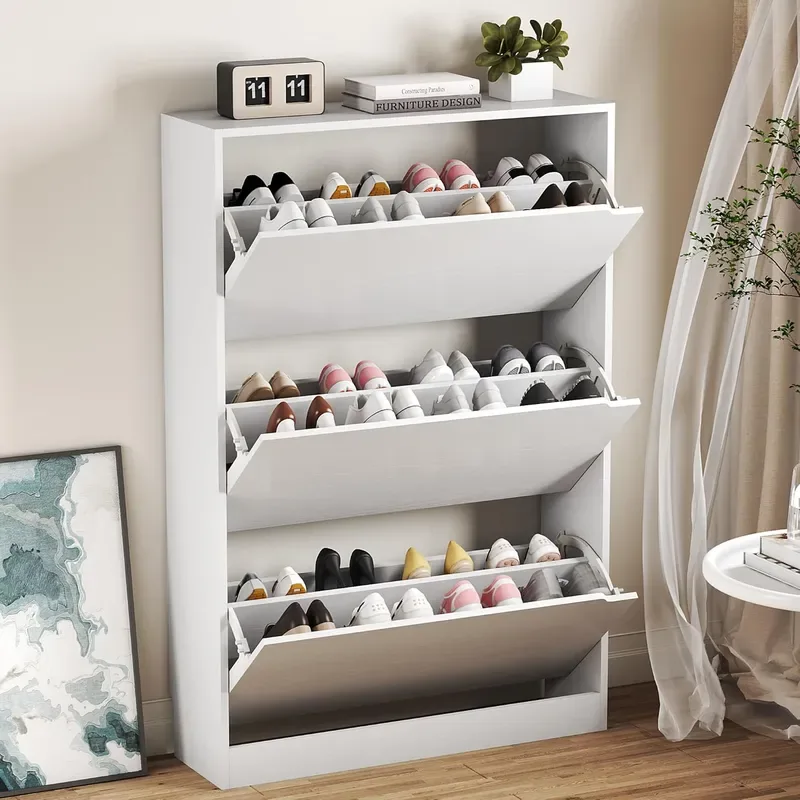
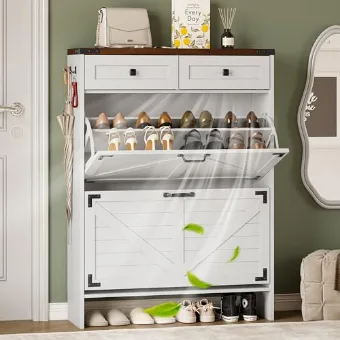
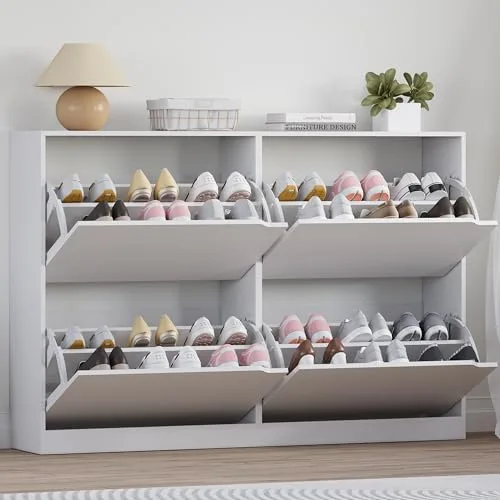
| Shoe Cabinets65 pieces | W29.9–47.2H32.3–52.4 | $89.99–$219.99 | Takes a season of shoes off a hall floor without narrowing the walkway. | Tall boots often will not fit a tilted drawer. |
| Nightstands38 pieces | W17.7–27.6H23.6–30.7 | $119.99–$269.99 | Puts a lamp, a glass and a charging phone within arm's reach of a pillow. | Small footprint means small surface. A pair costs the wall. |
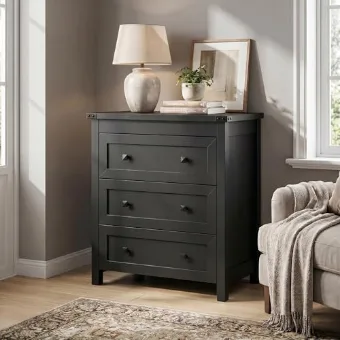
| Dressers64 pieces | W23.6–63H29.5–48.8 | $119.99–$359.99 | Holds folded clothes and gives a bedroom a surface at hip height. | More drawers at the same width means shallower drawers. |
| TV Stands6 pieces | W59–59.1H17.7–19.7 | $119.99–$189.99 | Carries a screen at sitting eye level and hides the boxes behind it. | Solid doors block an infrared remote. |
| Sideboards13 pieces | W29.5–65H29.1–31.5 | $116.99–$229.49 | Finishes a long wall and stores what a dining room accumulates. | Long pieces need a long clear wall and a level floor. |
| Console Tables4 pieces | W63H33.5 | $119.99–$139.99 | Gives a hall or a sofa back a surface without giving up floor. | Shallow means decorative storage only. |
| Pantry Cabinets12 pieces | W20.7–37H30.5–70.9 | $119.99–$199.99 | Adds cupboard to a kitchen that has run out, or hides the bin. | Tall and narrow is the shape that most wants anchoring. |
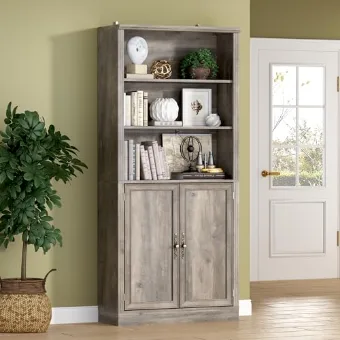
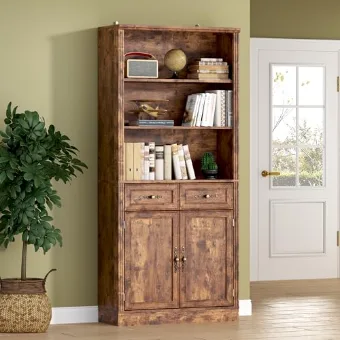
| Bookshelves6 pieces | W31.5H70.1 | $149.99–$179.99 | Shows what you want seen and closes the doors on the rest. | Outside the federal stability standard, so anchor it yourself. |
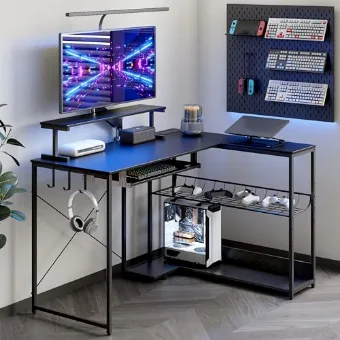
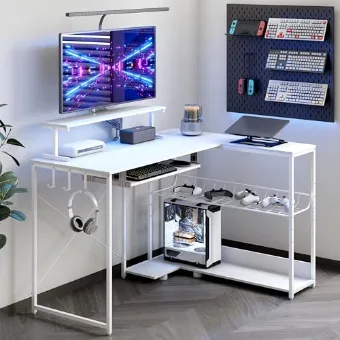
| Desks4 pieces | W46.2H36.3 | $89.99 | Turns a corner nobody uses into a two-screen working surface. | Fixed height. No standing option in this range. |
Depth runs from 9.2 to 19.3 inches across the range and is listed on every department page. To check a piece against a real gap, use the fit tool above.
In rooms
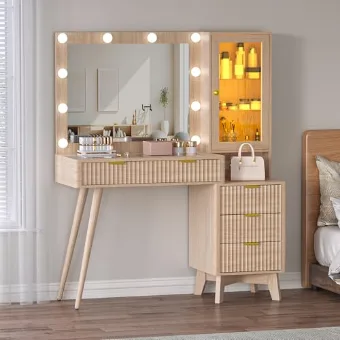
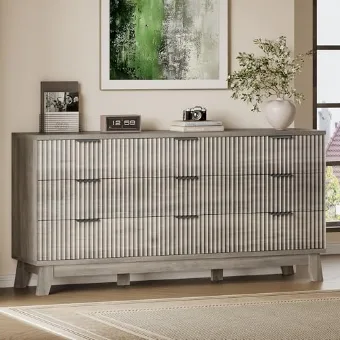
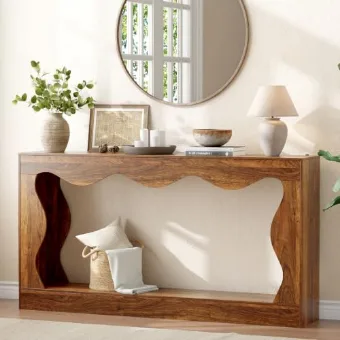
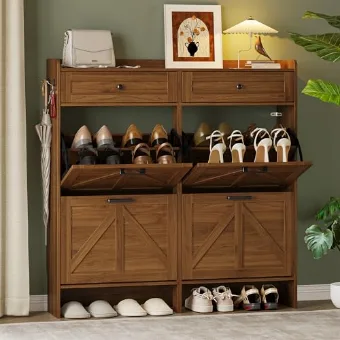
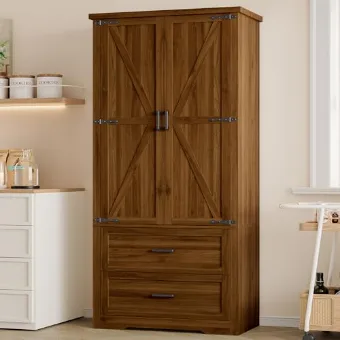
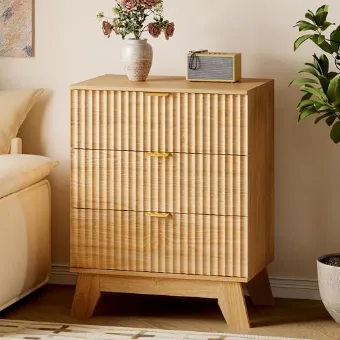
Twelve pieces in the settings they were shot in, so you can judge each finish against a real wall and a real floor.
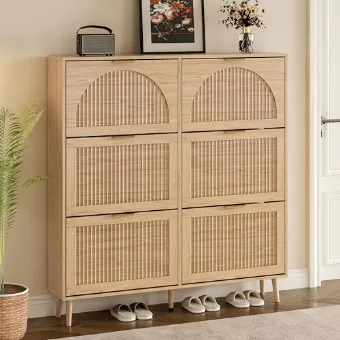
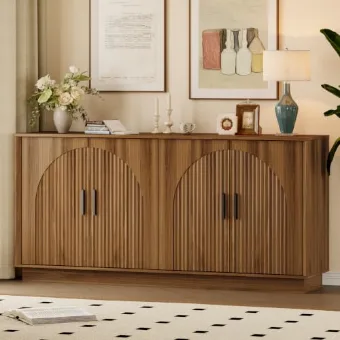
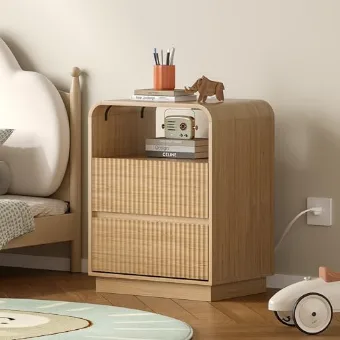
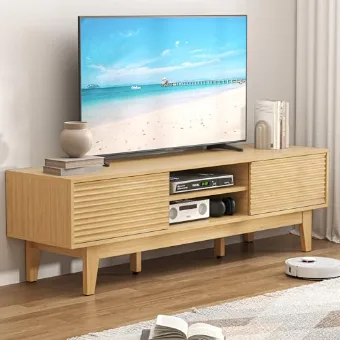
What it is made of
Most pieces name their board in the description, and the board decides how a piece handles weight, water and a routed front. Here is how it falls across 230 pieces.
| Named in the description | Pieces | What it means in use |
|---|---|---|
| Engineered wood | 146 | Wood fibre bonded into board, then faced. Stable, heavy, and unhappy if left standing in water. |
| MDF | 67 | A dense, even board that takes a routed fluted front cleanly. It is the reason the reeding on this range is crisp. |
| Glass top | 7 | Wipes clean after a spill, so it turns up on the dressing tables. |
| Metal frame | 7 | Steel legs or a steel understructure, used where a piece has to stay rigid on a small footprint. |
| Chipboard | 5 | Coarser than MDF and lighter. Fine for a carcass, less good for a routed face. |
| No material named | 32 | The description does not name the board for these pieces. |
Most of this range is engineered wood, medium-density fibreboard or particleboard. Those three materials are named in the EPA rule at 40 CFR part 770, which sits under 15 U.S.C. 2697 and sets formaldehyde emission limits for composite wood.
Since 22 March 2019 the regulated panels and the finished goods made from them have had to be certified and labelled as compliant with TSCA Title VI, through a third-party certifier approved by California's Air Resources Board and recognised by EPA. The federal limits were written to match the Californian ones.
Source: U.S. Environmental Protection Agency, Formaldehyde Emission Standards for Composite Wood Products read 8 August 2026
31 pieces in the range additionally state that the wood is FSC certified. That is a forestry claim about where the timber came from, and it is a separate matter from the emission rule above.
Safety
This is the part of the category that has a federal standard behind it. It is worth reading once, because the rule covers less than people assume and the physics covers more.
The STURDY law of 2022 told the Consumer Product Safety Commission to write a mandatory rule for clothing storage units. The result is 16 CFR part 1261, which applies to units made after 1 September 2023 and requires them to meet ASTM F2057-23.
The rule covers a unit only when it stands free, reaches 27 inches, weighs 30 pounds and encloses 3.2 cubic feet. Such a unit passes three stability tests. A clothing load test. A horizontal pull of 10 pounds at the highest hand hold, no higher than 56 inches. A carpet test that hangs a 60 pound weight off the drawer most likely to tip it. The box also holds an anti-tip device meeting ASTM F3096, and the rule sets the warning label wording.
Sources: U.S. Consumer Product Safety Commission, Clothing Storage Units: business guidance read 8 August 2026. Electronic Code of Federal Regulations, 16 CFR Part 1261, Safety Standard for Clothing Storage Units read 8 August 2026
Chests of drawers and bedside chests are the pieces the rule names. 98 of ours are chests or bedside chests standing 27 inches or taller, which is the height threshold in the definition. 190 pieces across the whole range state anti-tip hardware in the box.
The Commission names bookcases, entertainment furniture, office furniture, dining room furniture and accent furniture as outside the scope. In this range that means the bookshelves, the media consoles, the desks, the sideboards, the console tables and the kitchen cabinets have not been through those three tests.
That is a fact about paperwork, not about gravity. A tall narrow cabinet with weight up high still tips. The Commission's own tip-over campaign asks for top-heavy furniture to be anchored, for the anchor supplied with new furniture to go on straight away rather than later, and for the toys and remote controls children climb for to be kept off the top.
Source: U.S. Consumer Product Safety Commission, AnchorIt.gov, the tip-over prevention campaign read 8 August 2026
This is general safety information drawn from published federal guidance, not an assessment of your home or a substitute for the assembly instructions that come with a piece.
43.3 in wide · 7 drawers · black
43.2 in wide · 6 drawers · black
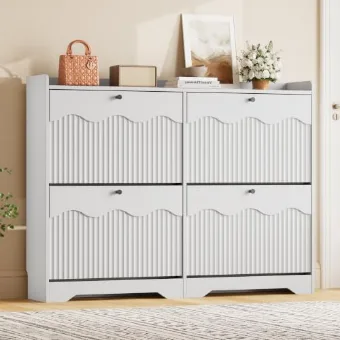
43.2 in wide · 6 drawers · white
43.2 in wide · 6 drawers · grey
Tool
Most people choose a shoe cabinet and then find out what it holds. Start from the pile instead. 56 of our shoe cabinets publish a pair range, running from 6 pairs at the low end to 36 at the high end.
Published pair ranges assume ordinary shoes. Boots take the space of two pairs and often will not lie in a tilted drawer at all.
Choosing
The range runs to 11 finish families. The choice is less about taste than about how much light the room already has.
Black is the largest group at 64 pieces. It holds an edge in a bright room and disappears in a dark one, which is useful for a piece you would rather not notice.
White gives a small room its light back, and it shows a scuff at ankle height in a hallway sooner than anything else here.
Walnut, oak and natural are the warm group. They are the ones to match to an existing floor rather than to a wall, because a floor is the larger surface and the harder one to argue with.
Grey sits between the two and is the safe answer in a room where the flooring and the walls disagree.
Finish names are the ones we publish for each piece. Screens differ, and a wood tone photographs warmer under the studio lighting used for these shots than it will under a north-facing window.
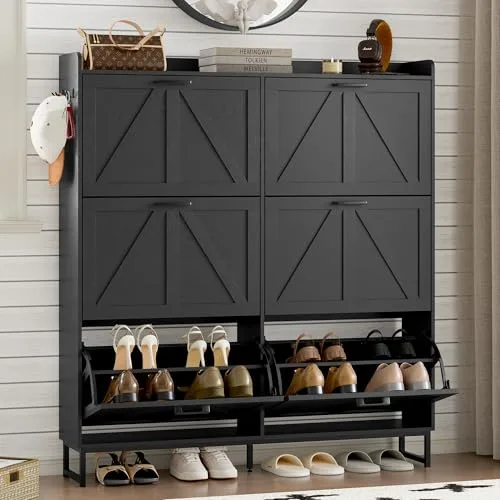
Built in
Sockets in furniture solve a specific problem: the cable that runs across a floor because the wall socket is in the wrong place. 44 pieces in the range build power into the body, and 25 carry lighting.
| Department | Pieces | Why there |
|---|---|---|
| Vanity Desks | 18 | A dryer and a straightener need mains power at the seat, not across the room. |
| Nightstands | 17 | One cable to the wall instead of three, and a phone that charges on the surface. |
| Desks | 4 | Screens, a laptop and a lamp on one run. |
| TV Stands | 3 | Six plugs behind a sofa become one. |
| Console Tables | 2 | Keys, phones and post land on the same hall surface. |
A built-in outlet is a convenience, not an upgrade to your wiring. It runs from the same wall socket on the same circuit, through a cable that comes with the piece, and the total load is what that cable is rated for. A hair dryer and a straightener at once is worth checking against the rating printed on the unit.
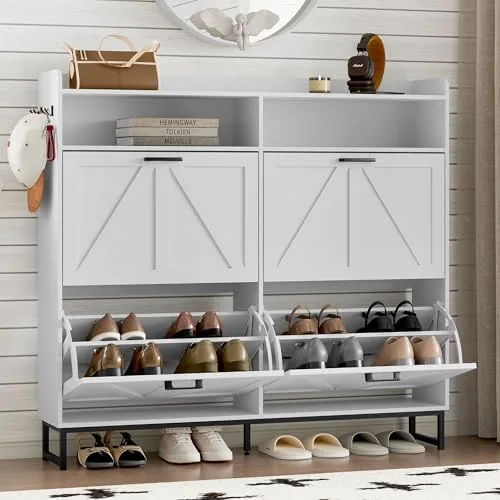
Port standards are not consistent across the range, so where a description does not say what the USB ports deliver, our page does not say either. Check the exact model before you plan on fast charging a laptop from a bedside table.
Two different things get called lighting here. On a dressing table it is a working light around a mirror, and it is the reason to buy the piece. On a console or a media unit it is a colour wash along the base, which is decorative and invisible in daylight. We name which is which on each product page.
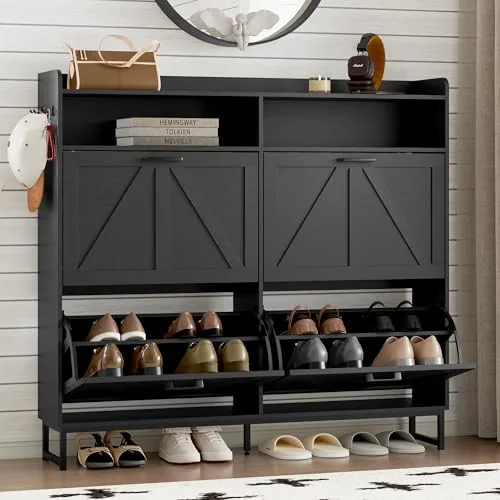
Living with it
None of this is complicated. All of it is the difference between a piece that still shuts properly in three years and one that does not.
Every piece here is assembled at home. Build it in the room it will live in rather than carrying a finished chest through a doorway, and keep the box until it stands square.
Published weights in the range run from 23 to 130 pounds, stated on 133 of 230 pieces. Anything at the upper end is a two-person build, mostly because of the moment when the carcass has to be stood upright.
The anti-tip bracket that comes in the box takes about five minutes while the piece is empty and is a much bigger job once it is full. The Consumer Product Safety Commission asks for it to go on straight away for exactly that reason.
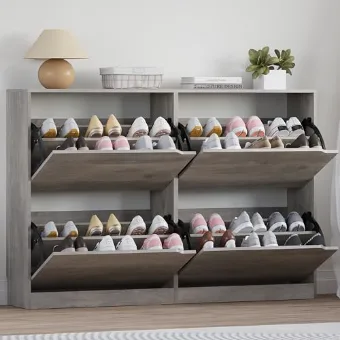
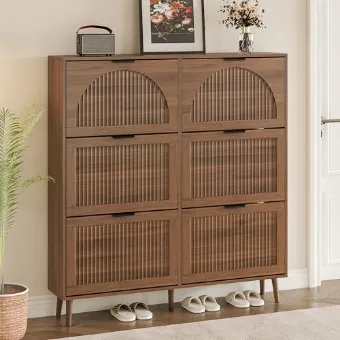
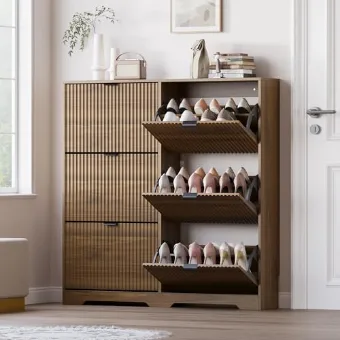
47.2 in wide · 6 flip drawers · walnut
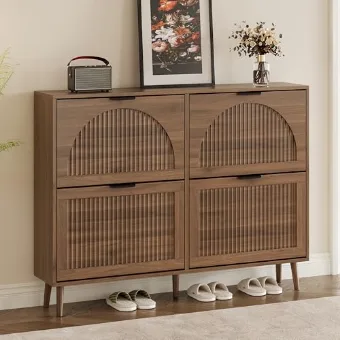
47.2 in wide · 4 flip drawers · walnut
A cabinet on an uneven floor twists, and a twisted carcass is why doors stop lining up. Shim the feet first. Adjusting hinges to fix a floor problem works for a fortnight.
Wipe spills off rather than leaving them. A damp ring on a fibreboard top swells the board underneath the finish, and that is not reversible. 34 pieces state a water-resistant top, which helps and is not the same as waterproof.
Weight low in a chest is weight that is not trying to tip it. It also makes the drawer slides last longer, because a heavy top drawer racks the carcass every time it is pulled out.
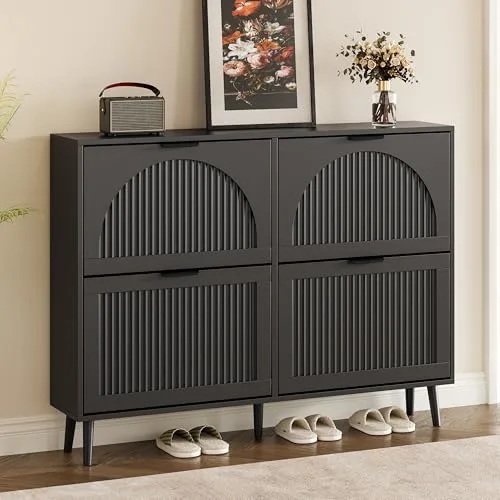
Common questions
Will it tip, will it fit, how long does the build take? These are the questions people ask before they order, and each answer below is counted across the 230 pieces in the range.
190 of 230 pieces state anti-tip hardware in the box. Chests and bedside chests 27 inches and over also fall under the federal stability standard described above, which means three separate tip tests before sale. Anchoring is still the step that does the work, and it takes five minutes during assembly.
Every piece arrives flat with instructions and the tools for it. Published weights run 23 to 130 pounds. Below about 60 pounds is a comfortable single-person build, above that is genuinely easier with two.
38 pieces state metal drawer slides, which is the specification that decides this.
47.2 in wide · 6 flip drawers · oak
Engineered wood on 146 pieces, MDF on 67, and a smaller number in chipboard, glass or with a steel frame. 32 pieces name no board at all in their description.
56 shoe cabinets publish a pair range, from 6 to 36. They are ranges because the honest answer depends on your shoes. Trainers and flats hit the top of the range, boots do not go in at all on some models.
Each piece carries its own finish name, and the photographs are studio shots, which run warmer than a north-facing room. Wood tones are the ones most likely to look different at home. Black and white are the ones least likely to.
Several are described for it. Two cautions. A screen wants to sit near eye level from a sofa, and most chests are taller than that. And a screen on top of a tall chest raises the centre of gravity of a piece that was already the tipping shape.
Start the return with the retail partner you ordered from, under their returns process. Keep the carton and the fittings bag until every panel is checked: the return is simpler with both.
Every piece arrives flat, so the carton passes a doorway the built piece never would. Measure the room it will stand in rather than the hall it travels through: the width on each page is the assembled width.
46.7 in wide · 6 flip drawers · walnut
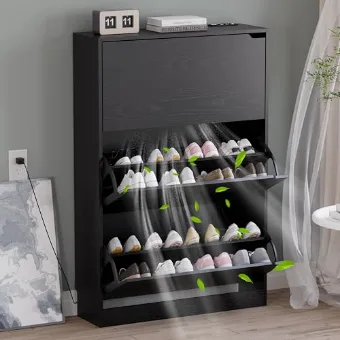
31.9 in wide · 3 flip drawers · black
31.7 in wide · 2 flip drawers · blue
44 pieces have a charging point built in, mostly nightstands and dressing tables. Plug the piece into a wall socket behind it and check the cable reaches before you push it back.
Every price carries the date of the last update, which is 8 August 2026. When a piece stops being orderable it leaves the range until it can be ordered again, so every price you read belongs to a piece you can order.
Longer reads
Measuring, anchoring and finish. The parts of buying storage furniture that go wrong quietly and cost the most to put right.
11 minute read
How deep a hall cabinet can be before it ruins the hall, what published pair counts really mean, and the six measurements to take before ordering.
12 minute read
Tall against wide, how drawer count changes what you can fold, and exactly what 16 CFR part 1261 requires of a dresser sold in the United States.
11 minute read
Why reeded furniture reads quietly in a small room, how to match a finish to a floor rather than a wall, and what composite wood means for the way a piece ages.
The BORNOON idea
BORNOON designs storage for the rooms that run out of space first. The hall that has to hold every pair of shoes in the house. The bedroom where the wardrobe is already full. The living room with one long empty wall and nothing that fits it.
A cabinet earns its place twice: once for what it holds, and once for what the room looks like with it there.
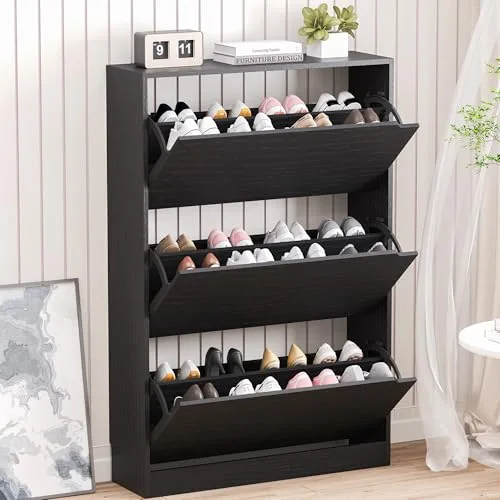
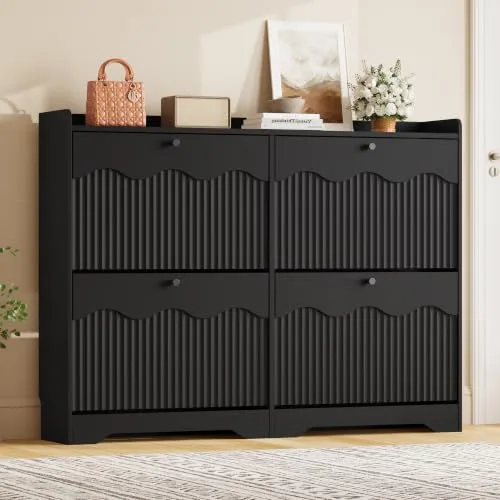
The range runs across ten departments. Shoe cabinets whose drawers tilt forward instead of swinging into the walkway. Chests from two drawers to twelve. Bedside tables with mains outlets built into the body, so the lamp and the phone share one plug behind the bed. Sideboards long enough to finish a wall. Tall pantry cabinets for kitchens with no cupboard left. Bookshelves, dressing tables with lit mirrors, and corner desks for the angle nobody knows what to do with.
Widths start narrow enough for a hall and run to the length of a sofa. Every piece states its own measurements on its own page, so two widths are easy to compare side by side.
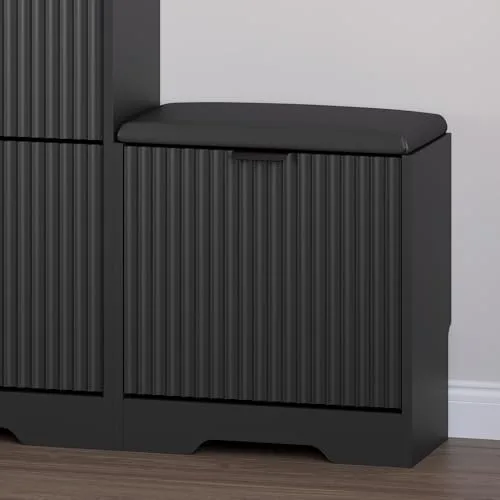
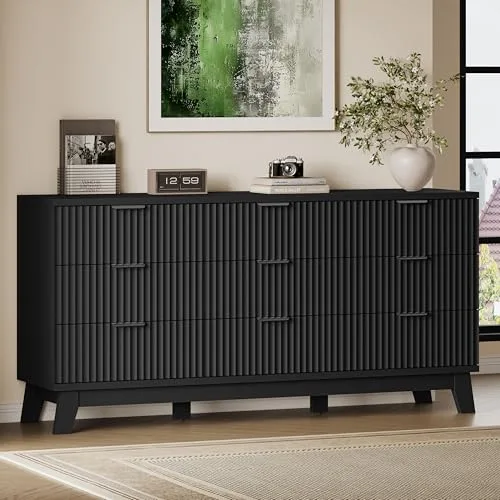
The reeded front is the through line of the BORNOON range. Around 109 pieces carry it, and the rest tend to answer it with a softened corner or a curved edge. That repetition is the whole point: a hall cabinet and a bedroom chest bought a year apart still read as belonging in the same house.
Reeding is also doing quiet work. Vertical ribs catch a little light along their length, which breaks up a large flat door and hides the fingerprints that a gloss front collects by the end of a week.
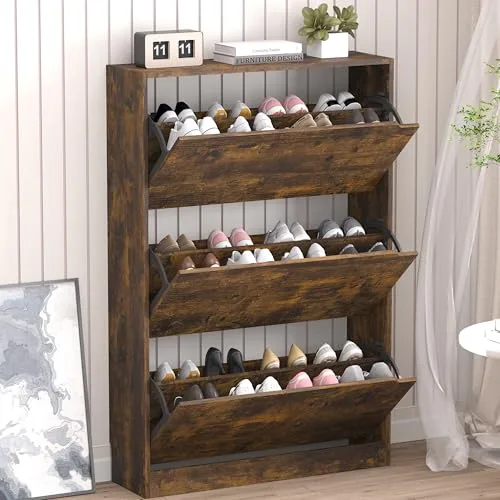
Handles come in three treatments, and the choice changes the character of the piece more than the colour does. Brass, for the pieces meant to look older than they are. Black metal, which disappears against a dark front and outlines a pale one. Or no handle at all, with the pull cut into the front, for the pieces meant to read as a single surface across a whole wall.
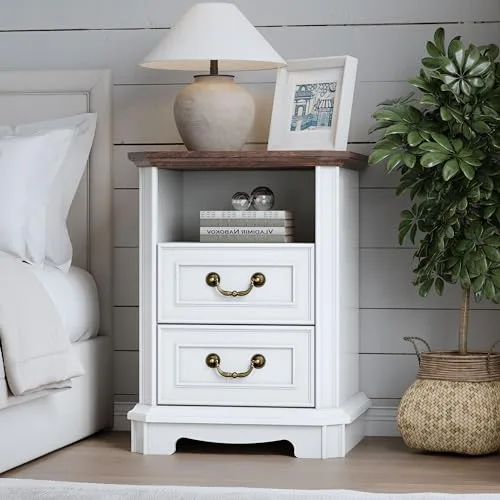
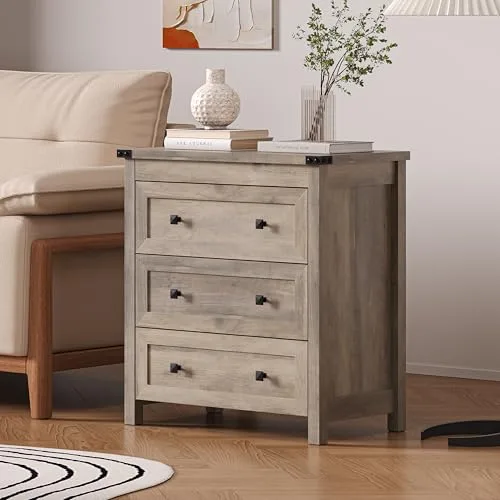
Eleven finishes, led by black, white and walnut, with oak and natural tones for rooms with wooden floors. The palette leans warm on purpose. A cool grey chest is easy to specify and hard to live with, because it sits against a wooden floor looking like it was delivered to the wrong address.
Storage furniture is heavy, and children climb. Where a piece states anti-tip hardware in the box, its page says so. Chests and bedside chests of a certain height fall under a federal stability rule, and the pages that touch that subject quote the rule and link to it with the date it was read, rather than summarising it from memory.
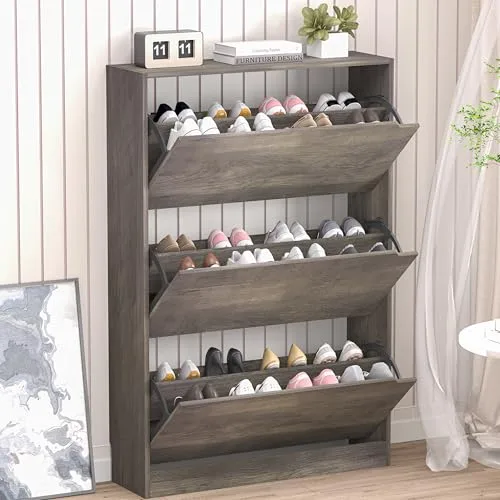
If you are working out what fits, start from the gap and not from the picture: the narrow hall guide and the guide to chest sizes and the stability rule do the arithmetic. With the gap settled, pick by room: BORNOON shoe cabinets stand along a hall wall, BORNOON chests of drawers take the bedroom.
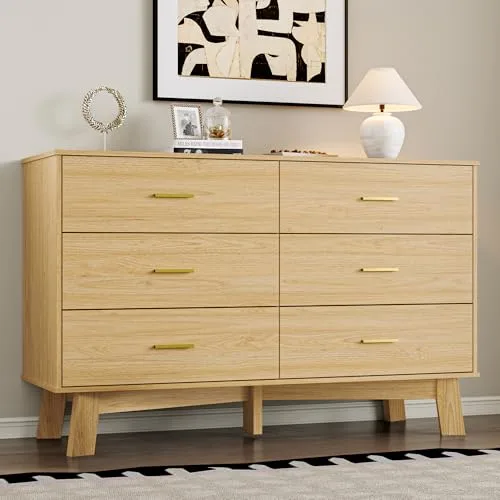
Five checks worth making on any flat-pack storage piece, and what our own figures say.
| What to check | BORNOON | A piece sold with none of this |
|---|---|---|
| Dimensions | Outside width, depth and height on all 230 pieces. | One size in the name, so the chest arrives and the drawer hits the radiator. |
| Anti-tip | Included with 190 pieces, and the instructions name the fixing step. | A tall unit with nothing to hold it to the wall and no mention of the risk. |
| Fittings | Drawer count, runners and handles named per piece: 155 are drawer units. | Ample storage, which tells you nothing about how many drawers there are. |
| Finishes | 11 named finishes, so two pieces can be matched by name a month apart. | Wood colour, which never matches the second time you order it. |
| Ratings | None published, because none were collected for this range. | A five star average borrowed from somewhere else in the shop. |
The ones that come before the millimetres.
31.5 in wide · 3 drawers · black
31.5 in wide · 3 drawers · white
Yes. We make storage furniture: dressers, shoe cabinets, nightstands, bookcases and stands, 230 pieces across 10 departments. Every piece lists its dimensions, finish and fittings.
Our retail partner. Ordering, payment, delivery and returns happen at checkout with them, and the dispatch address on the box is theirs.
The return goes through the retail partner you ordered from, inside the window they show at checkout. For a piece that arrives with a damaged panel or missing fittings, start the return there.
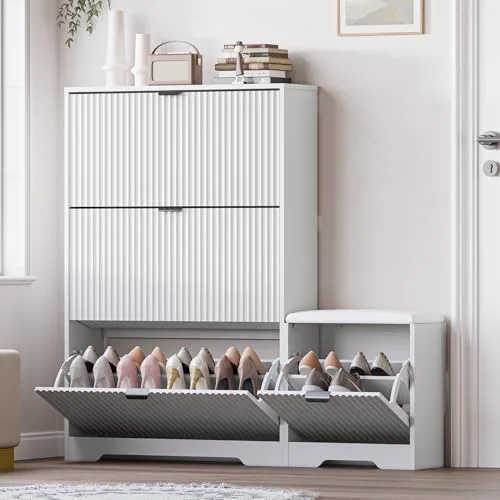
Measure the wall and the swing of the door before the piece. Every page prints outside dimensions rather than internal capacity, because the outside is what has to pass a doorway and stand against a wall. For a chest under a window, measure the sill height too: 155 of our pieces are drawer units, and a drawer that cannot open fully is a drawer you will stop using.
Tall drawer units tip. That is why 190 of our pieces ship with anti-tip hardware, and why the instruction to fix them to the wall is not optional. The federal rule on clothing storage units exists for exactly this, and our safety notes quote it with the date we read it.
31.5 in wide · 3 drawers · oak
31.5 in wide · 3 drawers · black
The range runs to 11 finishes, and 97 pieces carry the reeded front that is our recurring line. Finishes are named on each page rather than described as wood, so two pieces bought a month apart can be matched by name. Colour on a screen is never exact, and a photograph is not a swatch.
Numbers and sources
Every dimension, drawer count, colour and capacity figure on a BORNOON piece belongs to that exact piece and to no other. A drawer count is never borrowed from the model next to it, so two nightstands in the same finish can list different loads.
Prices carry the date of the last update, 25 September 2026. A chest or cabinet that stops being orderable leaves the range until its price returns, so every price you see belongs to a piece you can order.
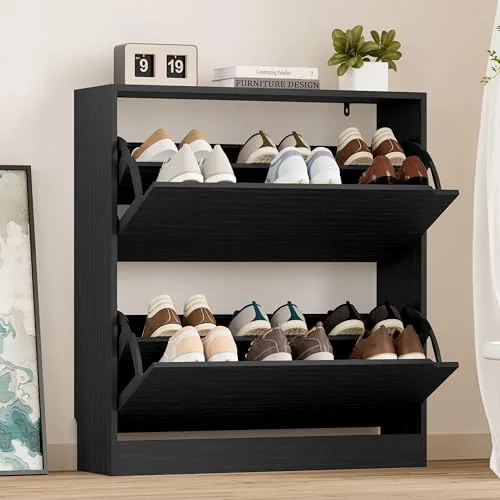
Delivery dates, stock and the return window come from the retail partner where you place the order. You see them at checkout, and their terms cover payment, delivery and returns.
Before you order, measure the gap, the skirting board and the route into the room. Every piece arrives flat, and the width on its page is the width that has to fit.
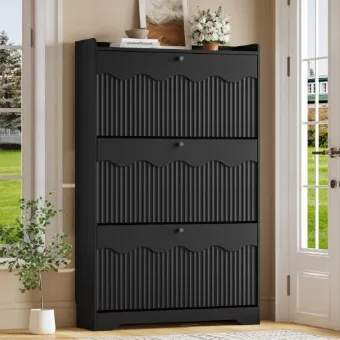
31.5 in wide · 3 flip drawers · black
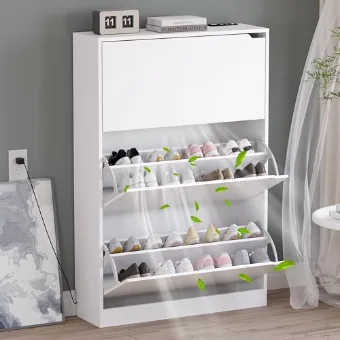
31.5 in wide · 3 flip drawers · white
31.5 in wide · 3 flip drawers · grey
The safety and materials sections quote federal rules. Each source was read on the date shown beside it and is linked, so you can check the wording yourself.