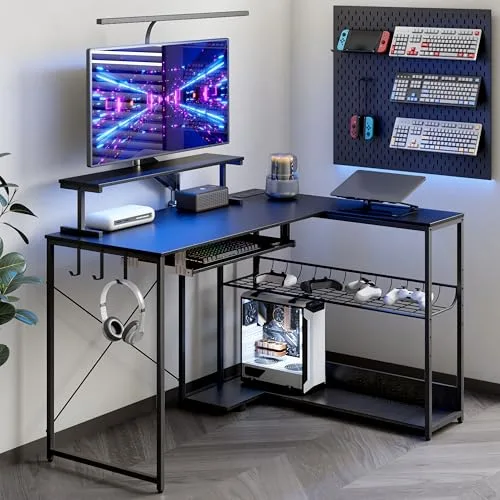
4 pieces
Desks and work tables
A corner desk uses the part of a room nothing else can. That is its whole argument and it is a good one.
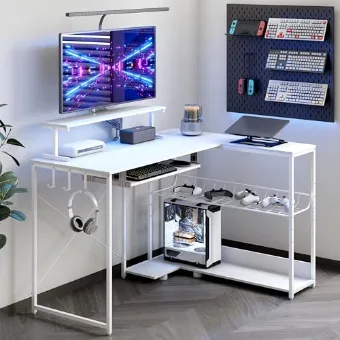

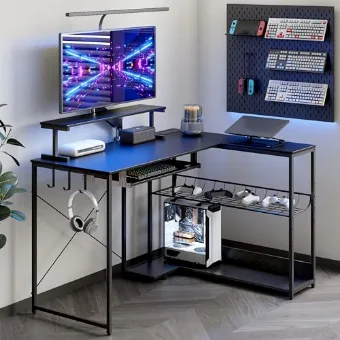
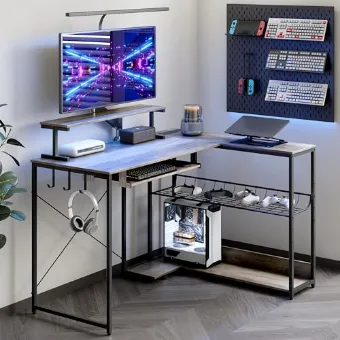
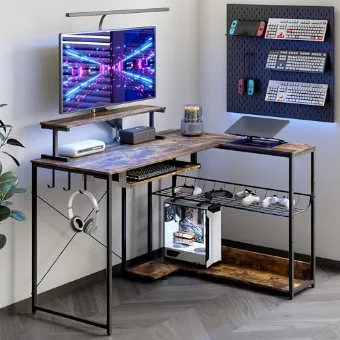
The corner is free floor
An L-shaped desk turns two walls into one working surface. In a bedroom or a spare room, the corner is usually the only space left, and a straight desk against a wall always ends up either too shallow for two screens or too deep for the room.
The desks here are reversible, so the long leg can run left or right and the desk can be built to suit which side of the room the window is on. Decide that before assembly rather than after, because reversing it later means taking it apart.
| Measurement | Range published |
|---|---|
| Width | 46.2 in, every piece |
| Height | 36.3 in, every piece |
| Depth | 19.3 in, every piece |
| Price | $89.99, every piece |
| Pieces on this page | 4 |
The riser, the shelves and the cables
The monitor stand raises a screen to a height where your neck stays neutral, and it frees the space underneath for a keyboard when you are not using it. The shelves beside it hold the things that otherwise cover a desk: a router, a headset stand, a stack of notebooks.
Mains outlets and USB ports are built into the frame on these models, which is the difference between one cable to the wall and a mains block on the floor. Cable routing runs through the frame rather than over the back edge.
Depth, and where the screens go
The measurement that decides whether a corner desk works is the depth of the leg you sit at. These run to 46.2 inches along the long side, and a screen wants to sit at roughly arm's length, which for most people is between 20 and 26 inches from the eye. A desk shallower than that pushes the screen closer than is comfortable for a full day.
The monitor riser buys some of that back by moving the screen up rather than towards you, and it frees the space underneath for a keyboard when it is not in use. Two screens change the arithmetic again: side by side they want the long leg, and the corner then holds the things you reach for rather than look at.
Finishes in this department
One decision belongs before assembly rather than after. These desks are reversible, so the long leg can run left or right, and which way it should run is set by the window. A screen with a window directly behind it is a screen you squint at all afternoon. Put the window to one side, and reversing it later means taking the desk apart.
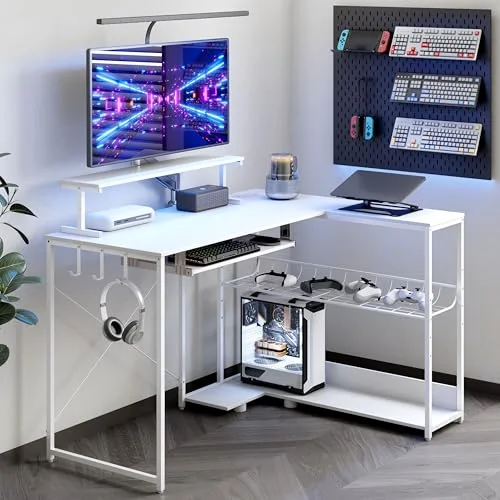
Lighting and honest limits
The lighting strip along these desks is colour-changing and aimed at a room used in the evening. It lights the wall behind the screen, which reduces the contrast between a bright monitor and a dark room and makes a long evening easier on the eyes.
One limit worth knowing: these are fixed-height desks. None of them rises for standing work, so a sit-stand routine needs a different desk.