11 minute read
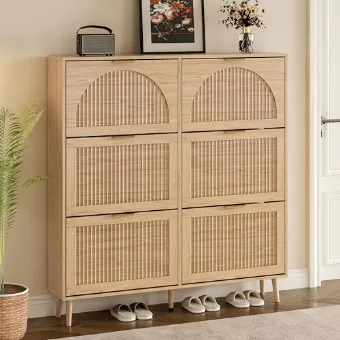
Shoe storage that fits a narrow hall
How deep a hall cabinet can be before it ruins the hall, what published pair counts really mean, and the six measurements to take before ordering.
Guide
Choosing a finish is usually described as a matter of taste. It is mostly a matter of light, of what your floor already is, and of what the material underneath will do in five years.
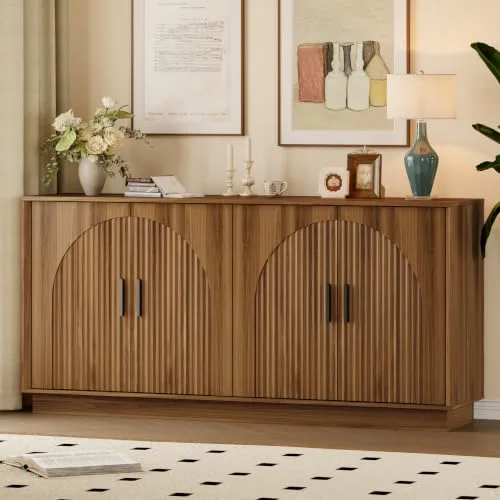
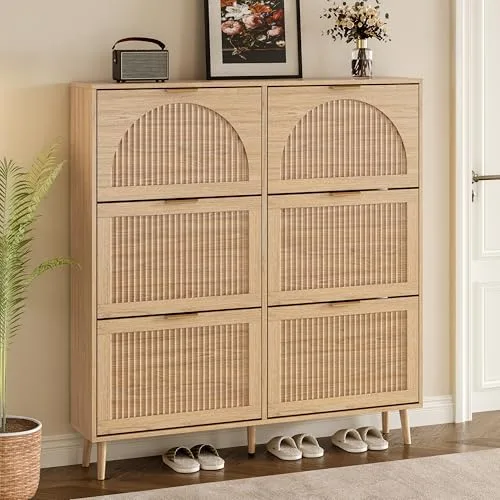
Fluting, or reeding, is a run of narrow vertical grooves across a flat face. It is old, it comes from column architecture, and it has come back into furniture for a reason that has little to do with fashion.
A large flat furniture front is a problem in a small room. It reflects light as one sheet, it shows every fingerprint and every slight bow in the panel, and it reads as a big object. Cutting vertical grooves into it breaks the reflection into narrow bands. The eye reads texture instead of size, and the piece gets quieter.
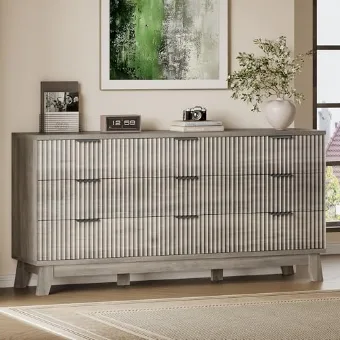
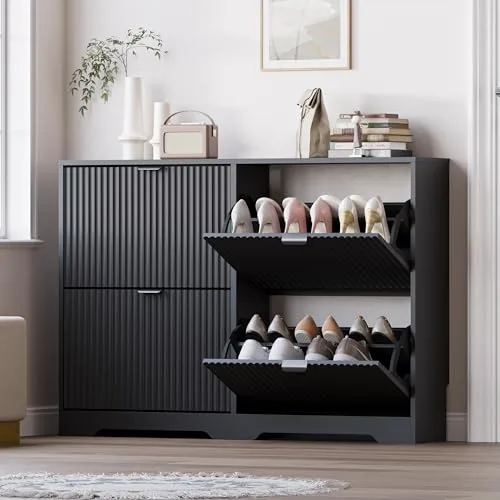
A second effect matters more. Reeding runs across the gaps between drawers, so a nine-drawer chest reads as one textured surface rather than a stack of nine boxes. 97 pieces in our range carry a reeded front. That is the reason the wide chests do not dominate a room.

The practical trade is cleaning. A grooved front holds dust in the flutes in a way a flat one does not, and it wants a dry brush or a vacuum brush head rather than a cloth. It is a minute's work and it is worth knowing before you buy four of them.
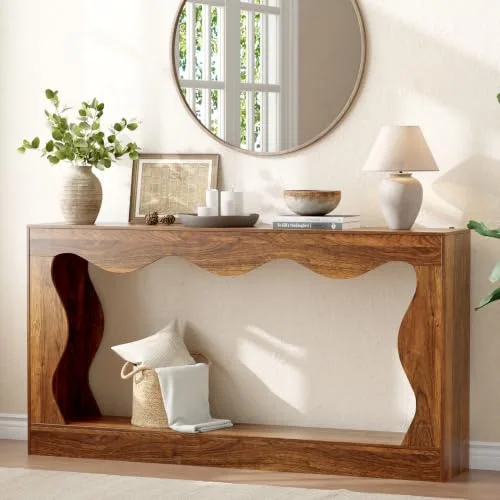
64 pieces here have rounded corners, a curved edge or a wave detail. That is not a separate style, it is the same idea from a different direction.
A sharp corner on a piece of furniture catches light as a hard line and catches hips as a hard edge. Softening it does two things at once: the piece stops drawing a boundary in the room, and a hallway becomes a place where you can pass a chest without bruising.
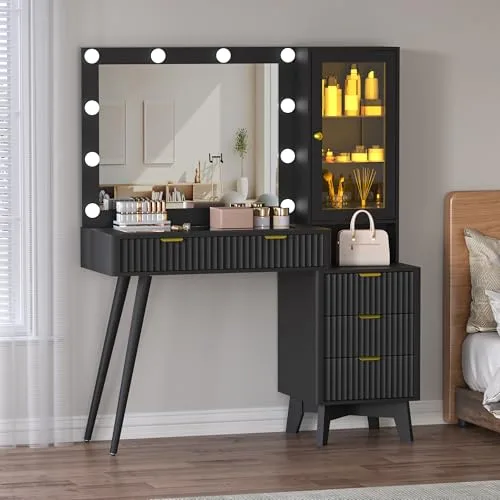
In a house with children the argument is stronger. The corner of a chest of drawers sits at roughly the height of a running four-year-old's forehead. This is not a safety claim about any particular piece, and it is a reasonable thing to think about when two otherwise identical cabinets are in front of you.
The usual advice is to pick furniture that matches the walls. It is the wrong instruction, because walls are the easiest surface in a room to change and floors are the hardest.
A floor is also larger than any single piece of furniture in the room and it runs underneath everything, which means it is the surface every other tone gets compared against. A walnut chest in a room with a light oak floor does not read as walnut. It reads as the wrong wood.
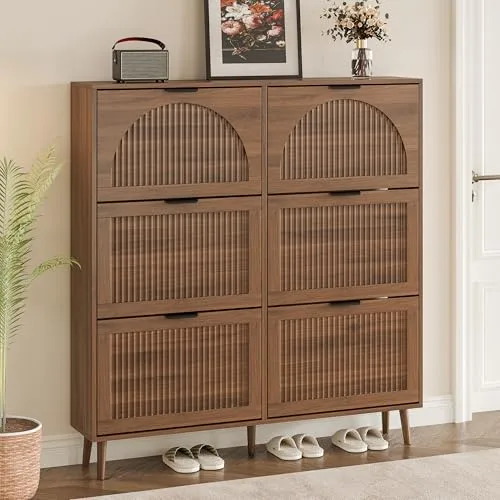
The workable rule is to either match the floor tone closely or step away from it clearly. A near-miss is what looks wrong. Our range breaks down into 11 finish families, and it is easiest to think of them in three groups.
| Group | Finishes | Pieces | How to use it |
|---|---|---|---|
| Warm woods | Walnut, Oak, Natural, Brown, Wood | 85 | Match to the floor. In a room with wooden flooring these either agree with it or clash, and a near-miss is what looks wrong. |
| Neutrals | White, Grey | 73 | White gives a small room its light back and shows hall scuffs first. Grey is the safe answer when floor and walls disagree. |
| Deep | Black | 64 | Holds an edge in a bright room and disappears in a dark one. The choice for a piece you would rather not notice. |
| Colour | Pink, Purple, Blue | 8 | Best on the smallest piece in the room rather than the largest. |
One more thing about photographs, including ours. Furniture is shot under warm, even studio lighting, and wood tones photograph warmer under it than they will look under a north-facing window in February. Blacks and whites travel well between light sources. Mid-tone woods are the ones most likely to surprise you, so if a room has a strong light direction, go one step cooler than the photograph suggests.
Almost everything in this category, at almost every price, is composite wood with a finish applied to it. Being clear about that is more useful than pretending otherwise.
Across our range, 146 pieces name engineered wood, 67 name medium-density fibreboard, and a smaller number name chipboard, a glass top or a steel frame. 32 name no material at all.
The three materials behave differently and it is worth knowing which one you are getting. Medium-density fibreboard is dense and even all the way through, which is exactly why it takes a routed reeded face cleanly. Chipboard is coarser and lighter, fine as a carcass and less good as a routed face. Engineered wood covers a range of bonded fibre boards and is generally the heaviest of the three.
All of them share one weakness: standing water. A spill left on a composite top will swell the board underneath the finish, and swelling is not reversible. 34 pieces in our range state a water-resistant top, which buys you time rather than immunity.
| Material | Pieces | What it means in use |
|---|---|---|
| Engineered wood | 146 | Bonded wood fibre, faced. The heaviest of the three and the most stable. |
| MDF | 67 | Dense and even throughout, so a routed reeded face comes out crisp. |
| Glass top | 7 | Wipes clean after a spill. Turns up on the dressing tables. |
| Metal frame | 7 | Steel structure where a piece has to stay rigid on a small footprint. |
| Chipboard | 5 | Coarser and lighter. Good as a carcass, less good as a routed face. |
| No material named | 32 | The description does not say, so neither do we. |
Composite wood panels release formaldehyde, and since 2016 there has been a federal rule about how much. It sits under 15 U.S.C. 2697, is codified at 40 CFR part 770, and it covers hardwood plywood, medium-density fibreboard and particleboard, along with the finished goods made from them.
The Environmental Protection Agency wrote the federal limits to match the ones California's Air Resources Board had already set, so the two regimes agree on the numbers. Certification runs through third-party certifiers approved by California and recognised by EPA.
The date that matters to a shopper is 22 March 2019. Since then, regulated composite wood products sold, supplied, offered for sale, imported into or manufactured in the United States have had to be certified and labelled as compliant with TSCA Title VI. That is a labelling requirement on the product, which means it is something you can look for rather than something you have to be told.
This is a materials rule rather than a safety rating, and it says nothing about how sturdy a piece is. It belongs in the same conversation as finish because it is the part of "what is underneath" that is actually regulated.
Sources: U.S. Environmental Protection Agency, Formaldehyde Emission Standards for Composite Wood Products (read 8 August 2026).
Ask someone to describe a piece of furniture they dislike and they will usually describe the finish. Ask them to point at what is wrong and they will nearly always point at the handle. It is the only part of a chest of drawers you touch, it is the part that catches light, and it is the detail that dates fastest.
This range splits three ways. Brass and gold pulls on 120 pieces, which is the warm option and the one that ties a wood tone to a room with brass elsewhere in it. Black metal, which reads as quieter and works against both pale and dark fronts. And hidden cutout handles on 11 pieces, where the pull is routed into the drawer front so the piece reads as one surface.
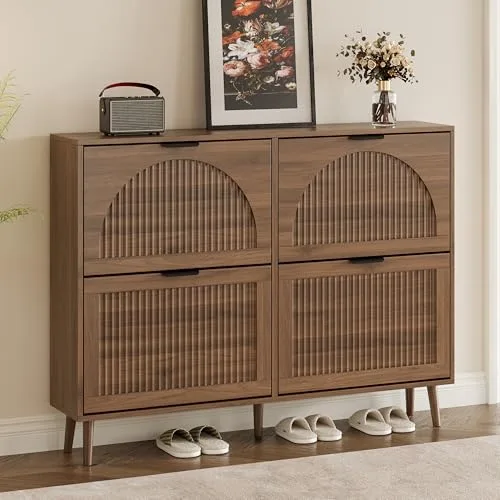
The hidden handle is the one to think about rather than just admire. It photographs well, it lets a fluted front run unbroken across a whole chest, and it is harder to open with a full armful of laundry or with wet hands. In a bedroom that is a small daily tax. In a hall cabinet you open standing on one foot, it is a larger one.
The practical rule for buying over time: keep the metal constant and let the wood vary. Two chests in slightly different oaks with the same brass pulls read as a matched pair. Two chests in identical oak, one with brass and one with black, read as a mistake. Metal is the stronger signal because it is the higher-contrast one.
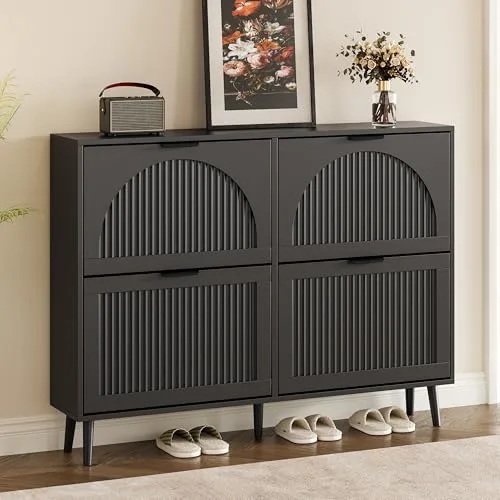
One caution about replacing handles. Fronts here are composite board with a finish over them, and drilling new holes at a different spacing leaves the old ones showing and weakens the front locally. If the handle is the thing you dislike, it is usually cheaper to choose a different piece than to change it.
Two rooms in the same house can make the same chest of drawers look like two different products, and the reason is the direction the light comes from rather than anything about the finish.
A north-facing room in the northern hemisphere gets light with almost no direct sun in it, and that light is cool. Wood tones lose their warmth under it, so an oak that looked golden in a photograph reads grey and slightly flat. A south-facing room does the opposite: the same oak reads warmer and more orange than the picture suggested.
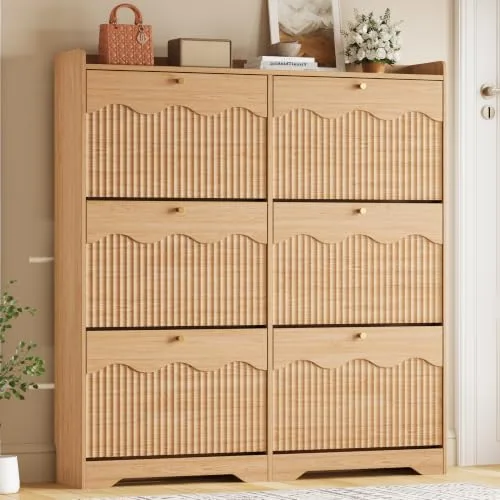
Artificial light makes it worse in the evening. A warm bulb at around 2700 kelvin pushes everything towards yellow, which flatters walnut and makes a cool grey look muddy. Whiter light near 4000 kelvin does the reverse. If a room is used mostly after dark, judge the finish under the bulbs you actually own rather than under a shop light or a studio photograph.
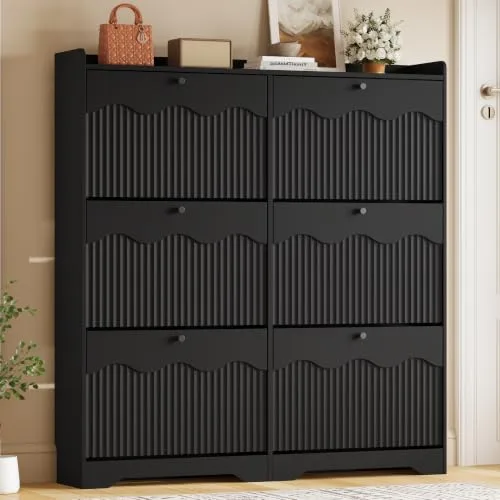
Three practical conclusions. In a north-facing room, go one step warmer than the photograph looks, because the room will take some of that warmth back out. In a room with strong direct sun, be aware that any wood tone will drift lighter over years of exposure and that a chest half in shadow can end up two tones by the window edge. And in a room where you cannot predict the light, black and white are the two finishes that travel between light sources without changing character.
This is also the honest limit of any photograph on any furniture site, including ours. Every picture here was shot under even, warm studio light. It is a fair representation of the piece and it is not a colour proof, and a wood tone is the case where the gap is widest.
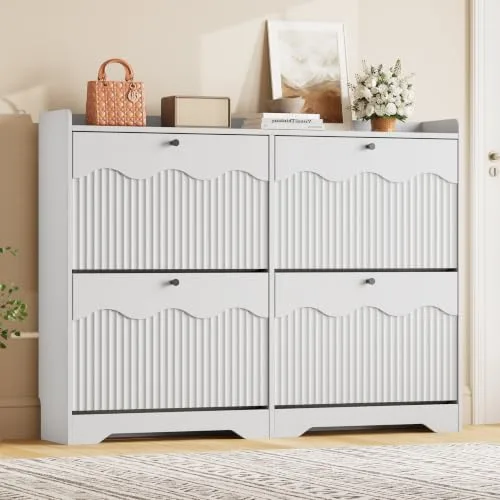
A range with one design language is only useful if the pieces can be bought over time without the room falling apart. Here is the order that tends to work, and what to hold constant.
Start with the largest piece in the room. It sets the tone everything else answers to. In a bedroom that is the chest of drawers, in a living room the sideboard or the media console, in a hall the shoe cabinet. Buy that one for the floor tone, not for the wall.
Then match handle metal, not wood tone. This is the trick that keeps a room together when pieces are bought a year apart. Two chests in slightly different oaks with the same brass handles read as a set. Two chests in identical oak with brass on one and black on the other do not.
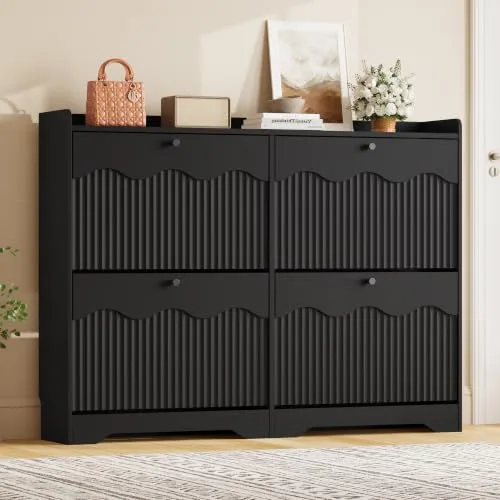
Keep the front treatment consistent within a sightline. Reeded next to reeded is calm. Reeded next to flat next to panelled, all visible from the sofa, is busy. Pieces in different rooms can differ freely.
Let the small pieces be the colour. If something is going to be pink, purple or a strong wood tone, make it the bedside table or the dressing table rather than the largest object in the room. Our dressing tables carry the widest colour range for exactly this reason.
| Room | Start with | Then | The thing that decides it |
|---|---|---|---|
| Hall | Shoe cabinet | Console table | Depth is the constraint. Everything else is negotiable. |
| Bedroom | Chest of drawers | Bedside tables | Buy the chest first. It sets the tone for the pair. |
| Living room | Sideboard or media console | Bookshelf | Keep front treatments consistent inside one sightline. |
| Dining room | Sideboard | Coffee bar cabinet | Length first. A short sideboard on a long wall looks like a mistake. |
| Kitchen | Pantry cabinet | Bin cabinet | Measure the internal shelf gaps against what you store. |
| Home office | Corner desk | Bookshelf | Corner desks use the part of a room nothing else can. |
Three things go wrong with composite furniture over years, and all three are avoidable.
The first is water damage at the top surface, discussed above. The second is racking, where a carcass twists because weight sat in the top drawers, and it shows up as drawers that no longer close flush. Load low and it does not happen. The third is edge wear at the corners of a piece in a corridor, which is exactly where rounded corners help.
What does not happen, in our experience of what the data describes, is sudden failure. These pieces either stay square or they gradually stop closing properly, and the gradual version is nearly always a loading or a levelling story rather than a manufacturing one.

One habit is worth more than the rest: level the feet properly on day one. A cabinet on an uneven floor twists slowly, and adjusting hinges to compensate for a floor is a repair that lasts a fortnight.
11 minute read
How deep a hall cabinet can be before it ruins the hall, what published pair counts really mean, and the six measurements to take before ordering.
12 minute read
Tall against wide, how drawer count changes what you can fold, and exactly what 16 CFR part 1261 requires of a dresser sold in the United States.